The term “evil eye” originates from the Greek word “mati,” which translates to “eye.” This term is often used to refer to a malevolent glare, purportedly capable of causing harm to the recipient. The belief in the evil eye dates back to ancient civilizations, including the Greeks, Romans, and Egyptians. Ancient texts have referred to the evil eye as a powerful force that could inflict harm, illness, or even bad luck upon individuals, particularly those who provoke envy.
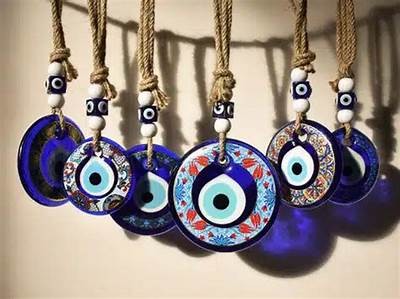
In many cultures, the evil eye is regarded as a protective charm. With a history stretching back over thousands of years, the concept has evolved, adapting to the social and cultural contexts of different societies. While it is deeply rooted in superstition, the evil eye garners a multitude of meanings and interpretations across traditions.
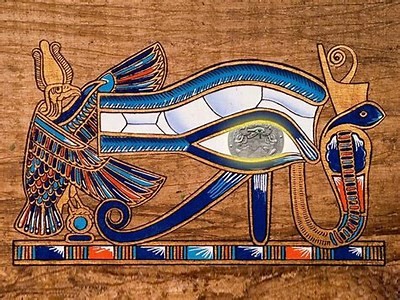
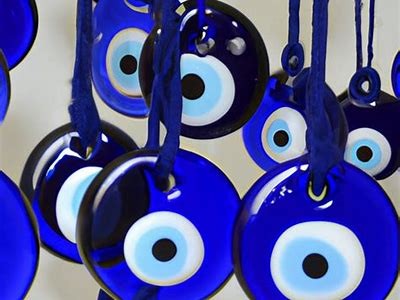
In Mediterranean cultures, especially in Greece and Turkey, the evil eye is commonly represented by a blue and white bead, known as the “nazar.” This amulet is believed to ward off the harmful effects of malevolent glares. The nazar is often worn as jewelry or hung in homes, serving as a protective symbol against envy and misfortune.
In Greek folklore, the evil eye is associated with the idea that admiration can lead to jealousy. Therefore, over-praising someone, especially a child or a beautiful woman, is often avoided to prevent drawing negative attention. This cultural understanding of the evil eye underscores the importance of humility and the social consequences of envy.

The evil eye holds significant cultural prominence in many Middle Eastern countries. In Islamic tradition, it is referred to as “al-‘ain” and is attributed to the belief that envy is a powerful and potentially destructive force. The Quran mentions the evil eye, highlighting its capacity to cause harm. As a result, protective measures, such as reciting specific prayers and wearing talismans, are commonplace in Islamic cultures.
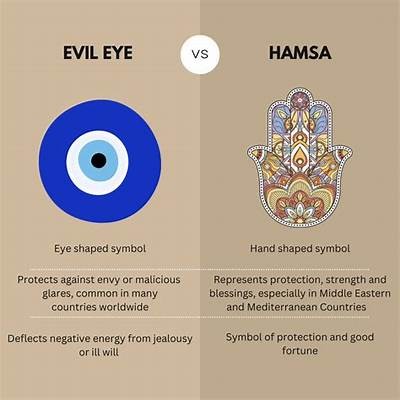
In countries like Egypt, Morocco, and Lebanon, the evil eye is not only a spiritual concept but a social one as well. Protective amulets featuring Quranic verses and symbols are widely used. Moreover, the evil eye is often believed to be responsible for unexplained ailments and misfortunes, indicating its pervasive influence in daily life. South Asian Perspectives
In South Asia, the evil eye, or “nazar,” manifests in diverse cultural practices across India, Pakistan, and Bangladesh. Similar to the Mediterranean, it is believed that giving excessive praise to someone can lead to attracting the evil eye. In households, protective measures like black dots or special colors are used to counteract the effects of jealousy.
Additionally, rituals are often performed to safeguard newborns from negative energies. Red thread and lemon-and-chili pendants are commonly employed as antidotes to protect against the evil eye. The symbolism observed in South Asian cultures highlights the community's collective engagement with spiritual beliefs and practices. Modern Interpretations and Globalization
As communities become more interconnected due to globalization, the significance of the evil eye has transcended its original cultural boundaries. Today, the evil eye has been adopted by various fashion and design trends, appearing in jewelry, clothing, and home décor worldwide. Its adoption has led to a wider appreciation of different cultural backgrounds, while also raising questions about cultural appropriation.
Young people, particularly in urban settings, have embraced the evil eye as a fashion statement, often without fully understanding its rich cultural significance. Artists and designers are increasingly incorporating the symbol into their work, creating a blend of modernity and tradition. While the evil eye retains its protective symbolism, it has also come to represent style and individuality in contemporary culture. Concluding Thoughts
The evil eye's rich tapestry of historical, cultural, and modern interpretations offers insight into human beliefs about envy, protection, and community. As societies continue to evolve, so too does the understanding and appreciation of symbols like the evil eye. While its core significance remains rooted in superstition, its evolving roles in diverse cultures reflect the fluid nature of symbolisms across time and space.
Ultimately, exploring the evil eye allows us to contemplate the deeper aspects of human experience, including our relationships with each other, our emotions, and the unseen forces that shape our lives. Whether viewed as a superstition or a cultural artifact, the evil eye serves as a reminder of the powerful influence that beliefs can have on our lives. Tags